Disclosure: This post contains affiliate links. If you make a purchase through these links, I may earn a small commission at no additional cost to you.
Those first few months are a blur of feeds, burps, and diaper changes. Your baby is awake for maybe 45 minutes at a time, and you’re running on cold coffee and three hours of broken sleep.
In the middle of all that, it’s easy to worry. Is my baby getting enough stimulation? Should we be doing more? Take a deep breath, mama. You don’t need fancy classes or expensive toys.
These 0-6 month baby activities are simple, short, and made for real life. Most take less than five minutes and use things you already have at home.
Here’s why they matter. In the first six months, your baby’s brain is building connections faster than at almost any other time. Gentle sensory play and movement help strengthen their eyes, neck, core, and hands, which sets the stage for rolling, sitting, and crawling.
Best of all, every activity below is really just time together. And that’s what your baby needs most.
High-Contrast Visual Play & Tracking (0–3 Months)
Newborns see the world in a soft, blurry haze. They focus best on objects 8 to 12 inches away, which is about the distance to your face during a feed.
Early on, babies pick up bold black-and-white patterns much more easily than soft pastels. Full color vision develops gradually over the first few months. That’s why high contrast play is one of the best newborn activities 0-3 months can offer.
1. Mirror Play
Babies love faces, even their own (they just don’t know it’s them yet!).
- Lay your baby on their back or prop them on your lap.
- Hold an unbreakable baby mirror about 8 to 12 inches from their face.
- Talk softly and point to their reflection: “Who’s that? That’s you!”
- Stop after a minute or two, or as soon as they look away.
Pro-Tip: Use mirror time during tummy time later on. Many babies lift their heads just to get a better look at “that cute baby.”
2. Slow Tracking
Baby tracking games build eye muscle control and focus. This one takes zero equipment.
- Lay your baby on their back in a calm, well-lit spot.
- Hold a bold toy or your face about 10 inches above them.
- Wait until their eyes lock onto it.
- Move it very slowly to one side, then back to the middle and over to the other side.
Pro-Tip: Move slower than you think you need to. If their eyes lose the object, pause and let them find it again.
3. Contrast Card Play
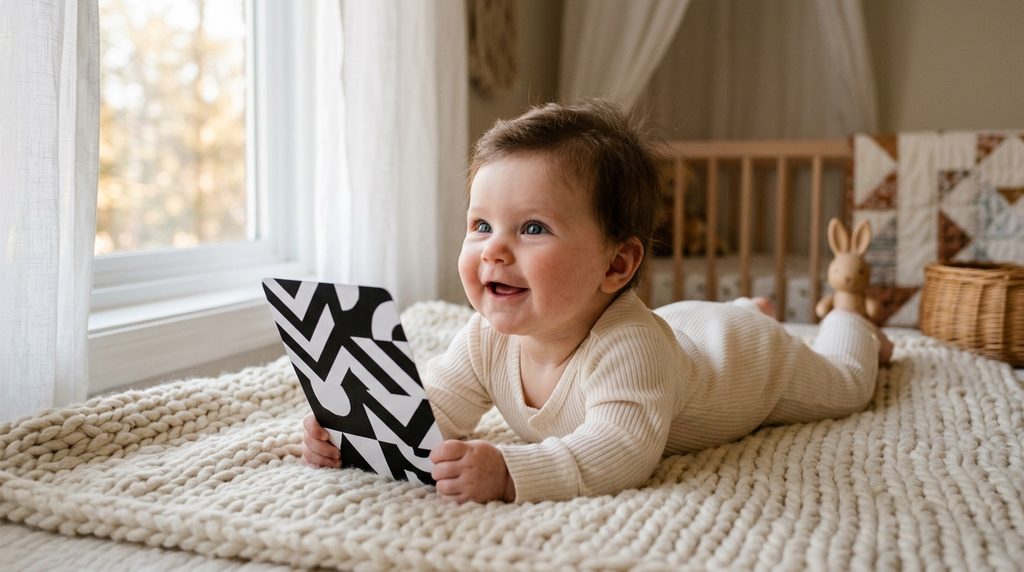
Black-and-white cards are like a picture book for newborns. They’re also a great way to make tummy time a little more interesting.
To encourage visual tracking during early awake windows, set up a set of high-contrast black and white flashcards at eye level during tummy time.
- Pick one or two cards with simple, bold shapes.
- Prop them up 8 to 12 inches from your baby’s face, or hold them during floor time.
- Let your baby gaze for as long as they want.
- Swap cards every few days to keep things fresh.
Pro-Tip: Babies often stare longest at faces and bull’s-eye patterns. Rotate, don’t overload. Two cards at a time is plenty.
Tummy Time Hacks & Chest Support (3–5 Months)
Tummy time builds the neck, shoulder, and core strength your baby needs to roll, sit, and crawl. It also helps prevent flat spots on the back of the head.
You can start supervised tummy time from day one with short sessions. By 3 to 5 months, aim for short sessions spread across the day that add up as your baby gets stronger.
If your baby screams the moment they hit their belly, you’re not alone. Many babies hate it at first because it’s hard work. These tummy time hacks make it easier for both of you.
4. Rolled Towel Chest Bolster
A little lift under the chest makes holding the head up much easier.
- Roll a small hand towel into a tight tube.
- Place it under your baby’s chest, just below the armpits, with their arms forward over the top.
- Get down on the floor face-to-face and talk or sing.
- Start with 1 to 2 minutes and slowly build up.
Pro-Tip: Your face is the best tummy time toy. Lie down at their eye level and watch how much longer they last.
5. Airplane Arms
This one feels like a game, but it’s tummy time in disguise.
- Lie on your back with your knees bent.
- Rest your baby tummy-down along your shins, holding them firmly under the arms and chest.
- Gently rock your legs up and down while making airplane sounds.
- Encourage them to lift their head and stretch their arms out wide like wings.
Pro-Tip: Keep a firm grip and move slowly. Around 5 to 6 months, you may spot them doing the “superman” pose on their own, with arms and legs lifted off the floor.
6. Water Mat Play
A water mat turns tummy time into a mini aquarium. The squishy feel and floating shapes are a hit with many reluctant babies.
If your baby resists lying on their tummy, set up a leak-proof tummy time water mat beneath their chest to keep them entertained with floating sensory shapes.
- Fill the mat with room-temperature water as the instructions describe.
- Check every seam for leaks before each use.
- Place your baby on their tummy with their chest and hands on the mat.
- Tap and press the mat yourself so the shapes move.
Pro-Tip: Always stay right beside your baby during water mat play, and toss the mat if it ever starts to leak.
7. Reach-and-Grab Setup
Reaching during tummy time teaches your baby to shift weight onto one arm, an important step toward crawling.
- Place your baby on their tummy, with a towel bolster if needed.
- Set a favorite toy just in front of one hand.
- Once they reach it easily, move it a little farther or slightly to the side.
- Celebrate every swipe, even the misses!
Pro-Tip: Switch sides each time so both arms get equal practice.
Early Fine & Gross Motor Play (4–6 Months)
Around 4 months, things get really fun. Babies start grabbing, kicking, bringing hands to mouth, and rolling.
These 4 month old play ideas help build 5 month old motor skills like reaching, kicking, and rolling, and they grow right into 6 month baby activities.
8. Wrist Rattles
Wrist rattles help babies discover that their hands make things happen.
- Fasten a soft rattle around one wrist, snug but not tight.
- Let your baby wave their arm and listen for the sound.
- Switch the rattle to the other wrist after a few minutes.
- Try ankle rattles to encourage kicking.
Pro-Tip: Remove rattles when playtime ends, and never leave them on during sleep.
9. Kick Play
Kicking strengthens the legs and core and teaches babies about cause and effect.
- Lay your baby on their back on a play mat.
- Hold a crinkle toy, soft ball, or your hands near their feet.
- Let them kick against it.
- Cheer every kick with a silly sound.
Pro-Tip: A play gym with a kick piano at the bottom keeps the fun going while you sit beside them.
10. Rolling Incentive Setup
Most babies roll from tummy to back first, then back to tummy, but every baby does it on their own timeline.
- Lay your baby on their back on a clear, flat floor space.
- Place a favorite toy just out of reach to one side.
- If they start to turn, gently help by guiding their hip and top leg over.
- Let them finish the roll themselves whenever they can.
Pro-Tip: Do the floor work on the floor. Never leave your baby on a bed, couch, or changing table, even for a second, once they show signs of rolling.
11. Side-Lying Play
Side-lying brings both hands together in front of the body, which makes reaching and grasping easier.
- Lay your baby on their side on the floor.
- Tuck a rolled towel behind their back for support.
- Place a toy in front of their hands.
- Switch sides after a few minutes.
Pro-Tip: Side-lying is for awake, supervised play only. Always place your baby on their back for sleep.
Taste-Safe Sensory & Texture Discovery
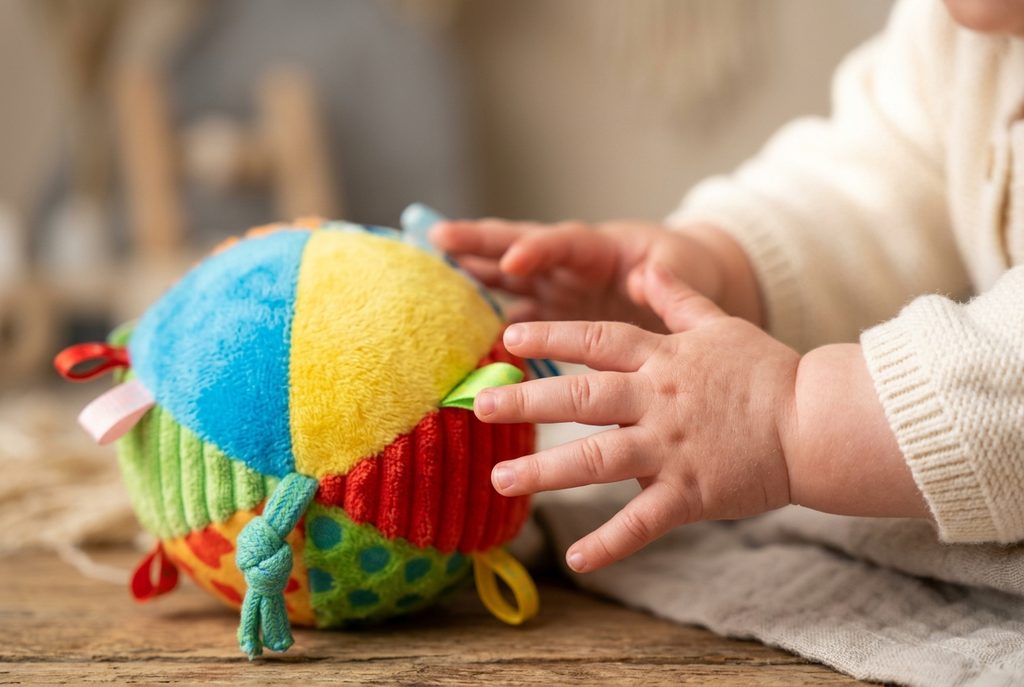
Infant sensory play is all about feeling, hearing, and seeing new things. And yes, almost everything will end up in their mouth!
Taste safe sensory for babies under 6 months doesn’t mean food. Most babies aren’t ready for solids until around 6 months, so these ideas focus on things that are safe to mouth and squeeze, with you close by.
12. Crinkle Paper
Crinkly sounds fascinate young babies.
- Fold a sheet of parchment paper inside a clean baby sock and tie the top in a knot.
- Let your baby squeeze and grab it.
- Crinkle it gently near each ear so they turn toward the sound.
- Check the sock and paper often and replace if anything tears.
Pro-Tip: Never use plastic bags or cellophane for crinkle play. They’re a suffocation risk.
13. Mirror Reflection Discovery
This step up from newborn mirror play adds touch and movement.
- Lay an unbreakable mirror flat on the floor during tummy time.
- Let your baby pat and slap at their reflection.
- Play peekaboo by covering the mirror with a soft cloth and pulling it away.
- Name body parts as they see them: “There’s your nose!”
Pro-Tip: This is a great one for 5 month old motor skills, since patting the mirror builds shoulder strength.
14. Soft Fabric Pulls
Pulling fabric builds grip strength and gives babies lots of new textures to feel.
- Gather a few soft fabric squares, like muslin, fleece, and silk.
- Tuck them loosely into an empty tissue box.
- Pull one out halfway and let your baby grab it.
- Name the texture as they touch it: “soft,” “smooth,” “fuzzy.”
Pro-Tip: Use short fabric squares, not long scarves or ribbons, and put them away after playtime.
15. Water Splashes
Warm water feels amazing and teaches cause and effect with every splash.
- Fill a baby tub with an inch or two of warm water, testing it with your wrist or elbow first.
- Support your baby’s head and back with one hand at all times.
- Show them how to pat the water with their hands.
- Add a cup and pour gentle trickles over their legs and tummy.
Pro-Tip: Never leave your baby alone in water, not even for a moment. Keep towels and everything you need within arm’s reach before you start.
Safety Guidelines for 0-6 Month Baby Activities & Overstimulation Signs
Play at this age should feel calm and happy, not like a workout. A few simple rules keep it safe.
Safe Play Basics
- Always supervise. Tummy time, side-lying, and water play are for awake, watched moments only.
- Avoid small parts. If a toy or piece can fit through a toilet paper tube, it’s too small.
- Skip strings and long fabrics. Ribbons, cords, and long scarves can wrap around little necks.
- Play on the floor. Babies can roll sooner than you expect.
- Check toys often. Look for loose seams, cracks, and leaks, and check for product recalls.
- Back to sleep, always. Play positions like tummy time and side-lying never replace safe sleep on their back.
Overstimulation Signs in Babies to Watch For
Babies can’t tell us when they’ve had enough, but they do show us. Common overstimulation signs in babies include:
- Turning their head or eyes away (gaze aversion)
- Fussing, crying, or arching their back
- Yawning, hiccups, or sneezing during play
- Clenched fists or stiff, jerky arm movements
- Suddenly falling asleep or “shutting down”
When you see these cues, stop and switch to calm time. Dim the lights, hold your baby close, and try again after a nap.
Pro-Tip: If your baby always turns their head to one side, struggles to lift their head by around 4 months, or you have any worries about development, talk to your pediatrician. Early support makes a big difference.
Why Everyday Moments Are the Best 0-6 Month Baby Activities
You don’t need a perfectly planned schedule or a playroom full of toys. The most powerful 0-6 month baby activities are the simple ones: your face, your voice, a few minutes on the floor together.
Every song during a diaper change and every silly face at feeding time is helping your baby grow. Pick one or two activities a day, follow your baby’s cues, and let the rest go. You’re doing a wonderful job, mama.
About the Author