Disclosure: This post contains affiliate links. If you make a purchase through these links, I may earn a small commission at no additional cost to you.
You want your toddler learning, but you don’t want flashcard drills or another hour on a tablet. Me too, mama. At this age, learning should feel like play, not homework.
That’s why I put together these free toddler printable worksheets. They’re gentle, hands-on, and built for little attention spans, covering colors, shapes, and numbers one tiny step at a time.
Print them once, protect them, and use them again and again. No pressure, no tears, just quiet moments of “I did it!” Download it below.
How to Build a Reusable Toddler Quiet Learning Binder
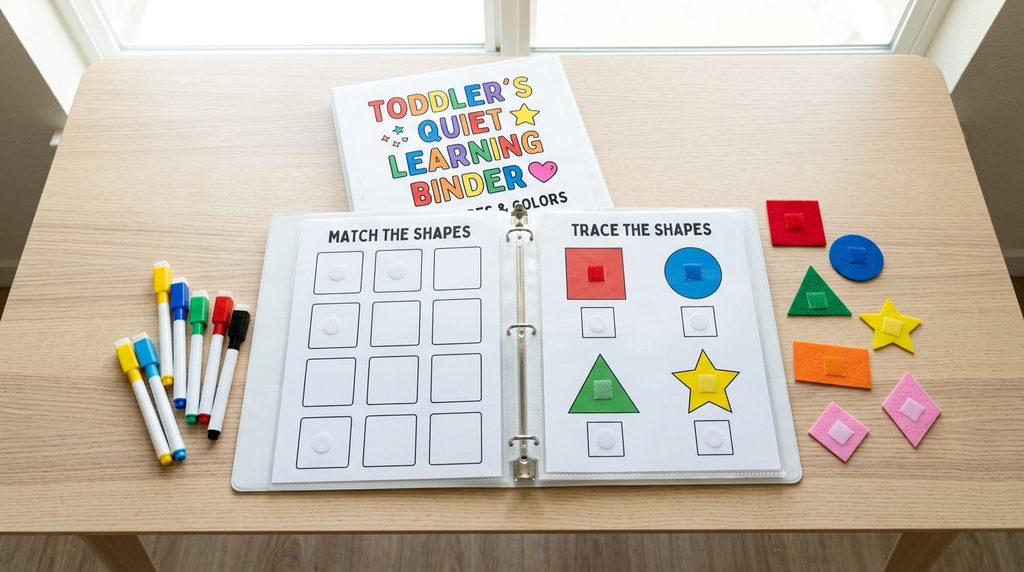
A toddler quiet binder turns loose worksheets into a grab-and-go activity book. It’s perfect for restaurants, waiting rooms, and those long afternoons at home.
Laminating vs. Sheet Protectors for Mess-Free Reuse
Laminating is sturdier and survives chewing, bending, and the occasional juice spill. Sheet protectors are cheaper and faster, and you can swap pages in seconds.
How to Use It:
- Print the pages on cardstock for extra durability.
- Laminate the pages your toddler uses most, like matching and tracing sheets.
- Slip the rest into sheet protectors so you can rotate them weekly.
- Clip everything into a 1-inch binder with a pencil pouch for markers.
Materials Needed:
- Cardstock paper
- Laminator or self-seal laminating sheets
- Sheet protectors
- 1-inch binder
Parenting Hack / Pro-Tip: Don’t own a laminator? Clear packing tape over both sides of a page works in a pinch.
Velcro Dot Matching Stations
Velcro pages are the heart of any printable toddler quiet book. Toddlers love the “rrrip” sound, and every match feels like a tiny win.
How to Use It:
- Laminate a matching page and its cut-out pieces.
- Stick the rough velcro dots on the page and the soft dots on the pieces.
- Keep loose pieces in a zip pouch clipped inside the binder.
- Show your toddler one match, then let them try the rest.
Materials Needed:
- Laminated printable pages and pieces
- Self-adhesive velcro dots
- Zip pencil pouch
Parenting Hack / Pro-Tip: Cut pieces big, at least the size of a matchbox. Little ones still mouth things, so skip anything small enough to swallow.
Early Color Recognition Worksheets & Matching Games
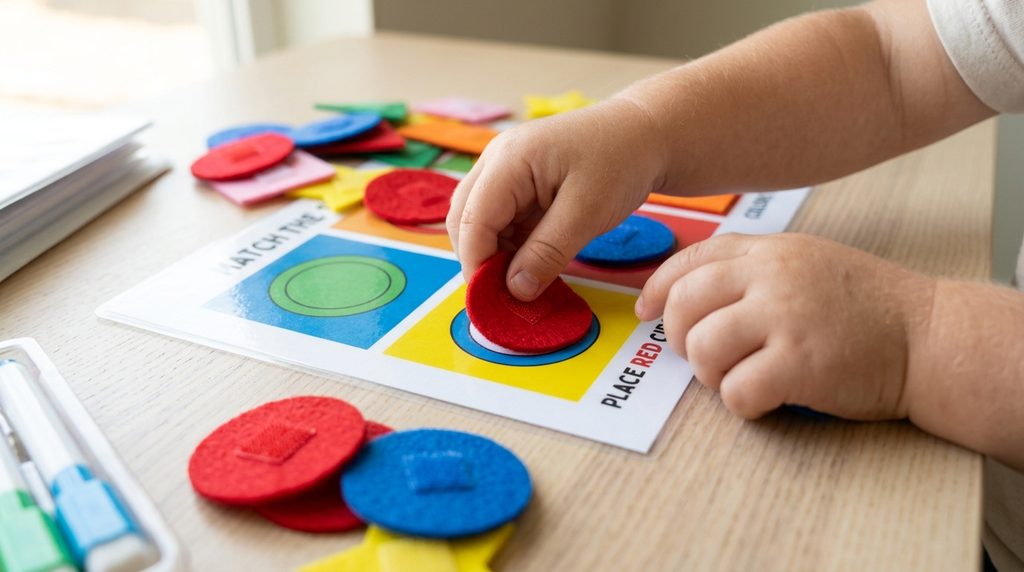
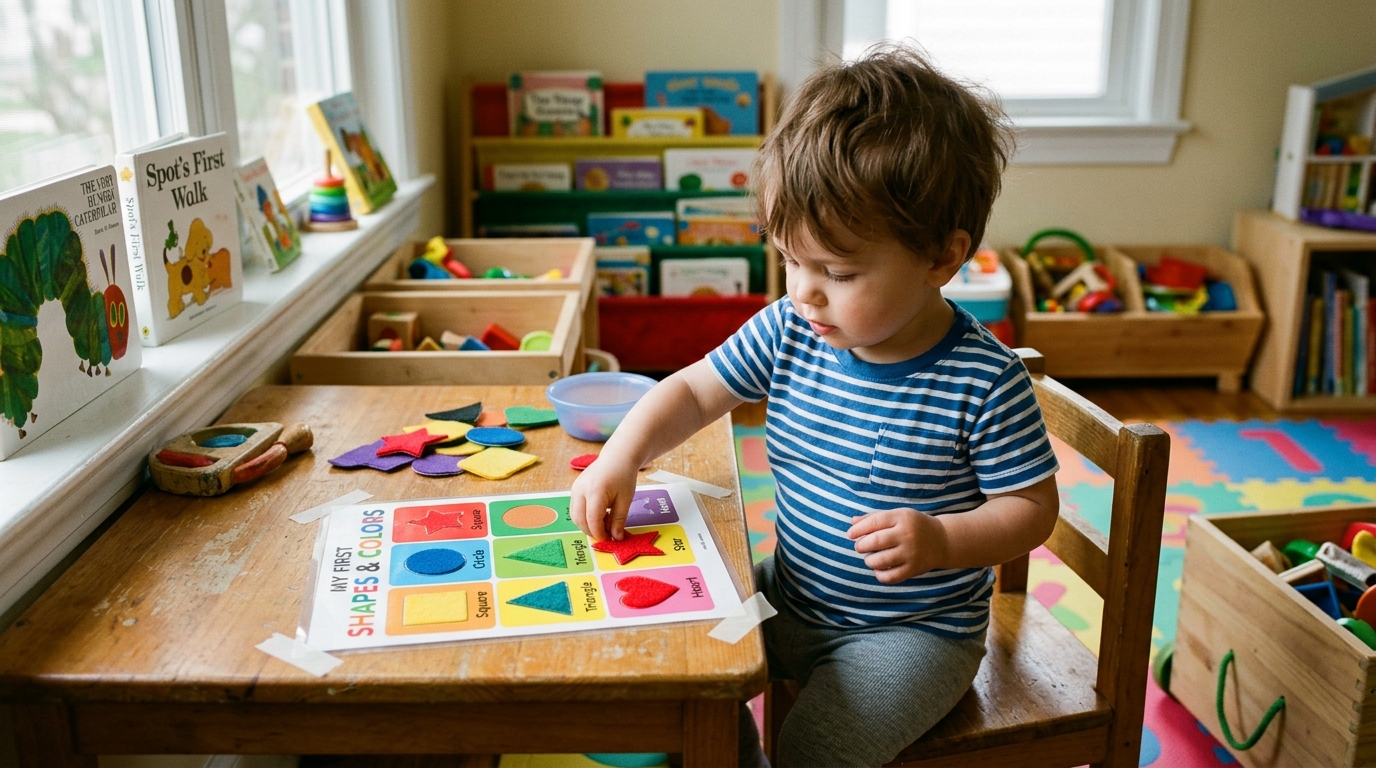
Color is usually the first concept toddlers latch onto. These shape and color worksheets toddlers love start simple and grow with them.
Primary & Secondary Color Sorting Sheets
Start with just red, yellow, and blue. Once those click, bring in green, orange, and purple.
How to Use It:
- Lay out the sorting mat with colored “buckets.”
- Hand your toddler colored pieces one at a time.
- Say the color name as they place each piece.
- Add secondary colors only when primaries feel easy.
“★ How to Make These Worksheets Reusable: To use these activity sheets over and over again, run them through a thermal laminator machine or slip them into dry-erase pockets!”
Materials Needed:
- Printed and laminated sorting mat
- Colored cut-out pieces or velcro cards
- Binder or flat tray
Parenting Hack / Pro-Tip: Name colors during everyday moments too, like “your red cup” or “the blue car.” Worksheets work best when the real world backs them up.
Color Hunt & Clip Card Station
Clip cards are a fine motor workout disguised as a game. Color hunts get toddlers up and moving around the house.
How to Use It:
- Show a clip card with one color and three objects.
- Help them pinch a clothespin onto the matching object.
- For color hunts, hand them a color card and search the room together.
- Collect found items in a basket and celebrate each one.
“Pair these laminated worksheets with low-odor dry-erase markers so your toddler can trace, wipe clean, and repeat.”
Materials Needed:
- Printed clip cards on cardstock
- Clothespins
- Small basket
Parenting Hack / Pro-Tip: Clothespins are tricky for young hands. Start with chip clips or chunky clothespins, and watch for pinched fingers.
Simple Number & Counting Activity Sheets (1–5)
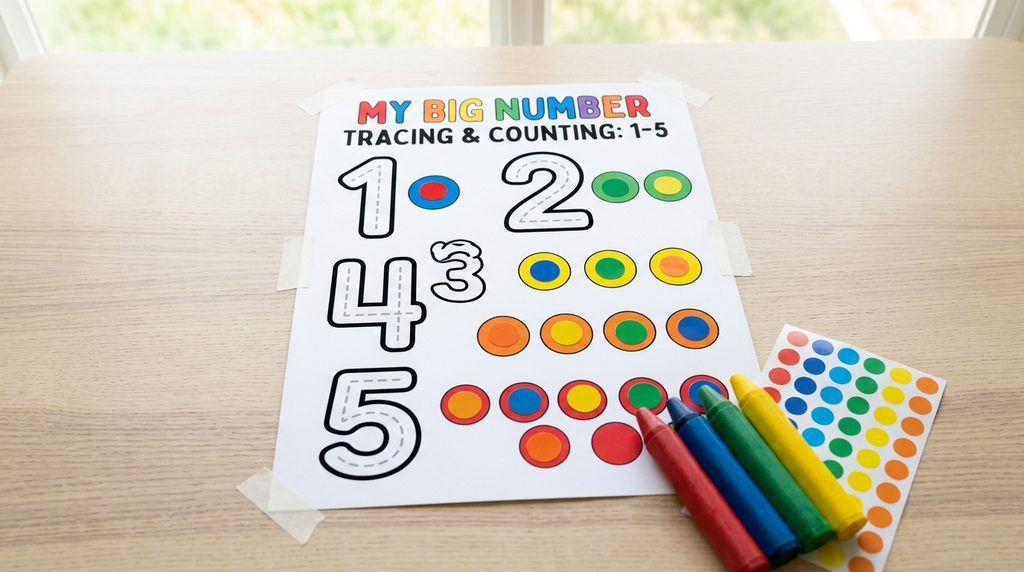
These learning activities for 2 year olds keep numbers small and friendly. Counting to five is a huge win at this age.
Big Number Tracing & Finger Dot Counting
Big, bold numbers give little fingers plenty of room. Dots inside each number let them “touch and count.”
How to Use It:
- Slip the page into a sheet protector.
- Have them trace each number with their finger first.
- Then trace with a dry-erase marker.
- Touch and count the dots out loud together.
Materials Needed:
- Number tracing printable
- Sheet protector
- Chunky dry-erase markers
- Small eraser or sock for wiping
Parenting Hack / Pro-Tip: An old sock makes the best eraser. Slip it on their hand and let them “wipe it clean” for round two.
Counting Object Matching & Sticker Placement
Matching a number to a group of objects is the moment counting really clicks. Stickers make it feel like a reward.
How to Use It:
- Show the number card and count the empty circles together.
- Let them place one sticker in each circle.
- Match the finished card to a picture of the same amount.
- Stick to numbers 1 through 3 first, then add 4 and 5.
Materials Needed:
- Counting printable
- Dot stickers
- Velcro picture cards
Parenting Hack / Pro-Tip: Peel the backing off the sticker sheet first, leaving only the dots. Little fingers can grab them much more easily.
Shape Tracing & Early Fine Motor Worksheets
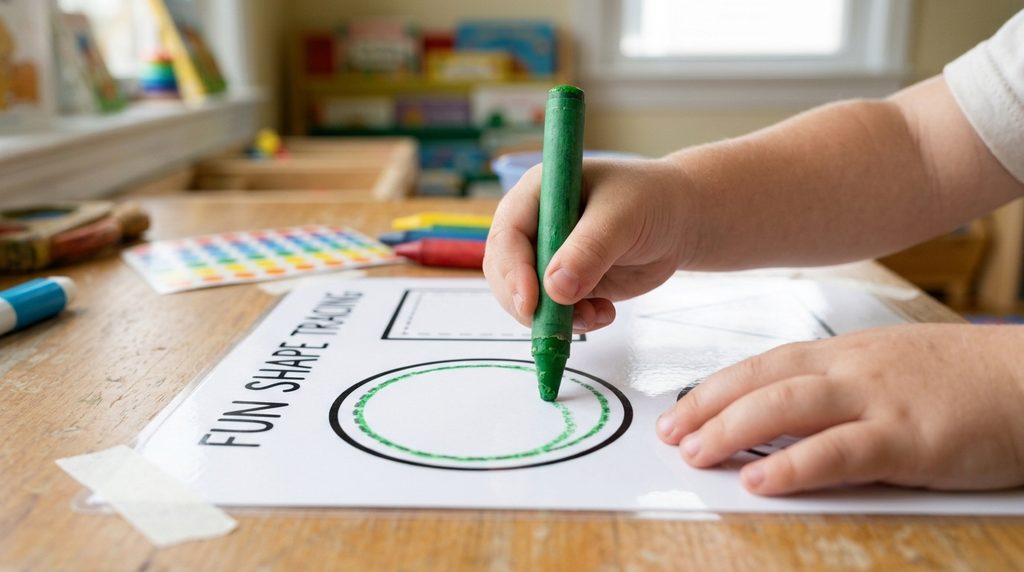
Tracing worksheets for 2 year olds should be big, bold, and forgiving. Wobbly lines are perfect at this stage.
Big Shape Tracing (Circle, Square, Triangle, Star)
Start with circles, since they’re the easiest shape for toddler hands. Stars can wait until closer to age three.
How to Use It:
- Trace each shape with a finger while naming it.
- Switch to a dry-erase marker and trace again.
- Hunt for the same shape around the house afterward.
- Wipe clean and repeat whenever they like.
Materials Needed:
- Shape tracing printable
- Sheet protector or lamination
- Dry-erase markers
Parenting Hack / Pro-Tip: Let them trace with a toy car “driving” along the lines. Same skill, way more giggles.
Path Tracing & Pre-Writing Line Exercises
Straight, zigzag, and curvy paths build the control they’ll need for writing later. Think “help the bunny get to the carrot.”
How to Use It:
- Start with straight lines from left to right.
- Move on to curves and zigzags as they get comfortable.
- Tell a quick story for each path to keep it fun.
- Stop while they’re still enjoying it.
Materials Needed:
- Path tracing printables
- Sheet protector
- Chunky dry-erase markers or crayons
Parenting Hack / Pro-Tip: Two or three pages is plenty. Ending on a happy note keeps them asking for “more binder.”
Frequently Asked Questions About Toddler Printables
At what age can a toddler start using printable worksheets?
Around 18 months, many toddlers enjoy simple velcro matching and color sorting. Tracing usually works better closer to age 2 or older, once they can grip a crayon.
Follow your child’s lead. If they’re not interested yet, put it away and try again in a few weeks.
How do I keep a 2-year-old interested in learning printables?
Keep sessions short, about 5 to 10 minutes. Rotate pages weekly so the binder always feels a little new.
Most importantly, sit with them and make it playful. Your attention is the real magic behind any printable.
Conclusion & Free Download
Early learning doesn’t need pressure or perfection. A few colorful pages and a little time together go a long way.
Ready to start? Download your free Toddler Learning Pack below with color, shape, number, and tracing pages, all ready to print and pop into your binder!
About the Author